
Choosing the Right Yarn for Your First Woven Scarf
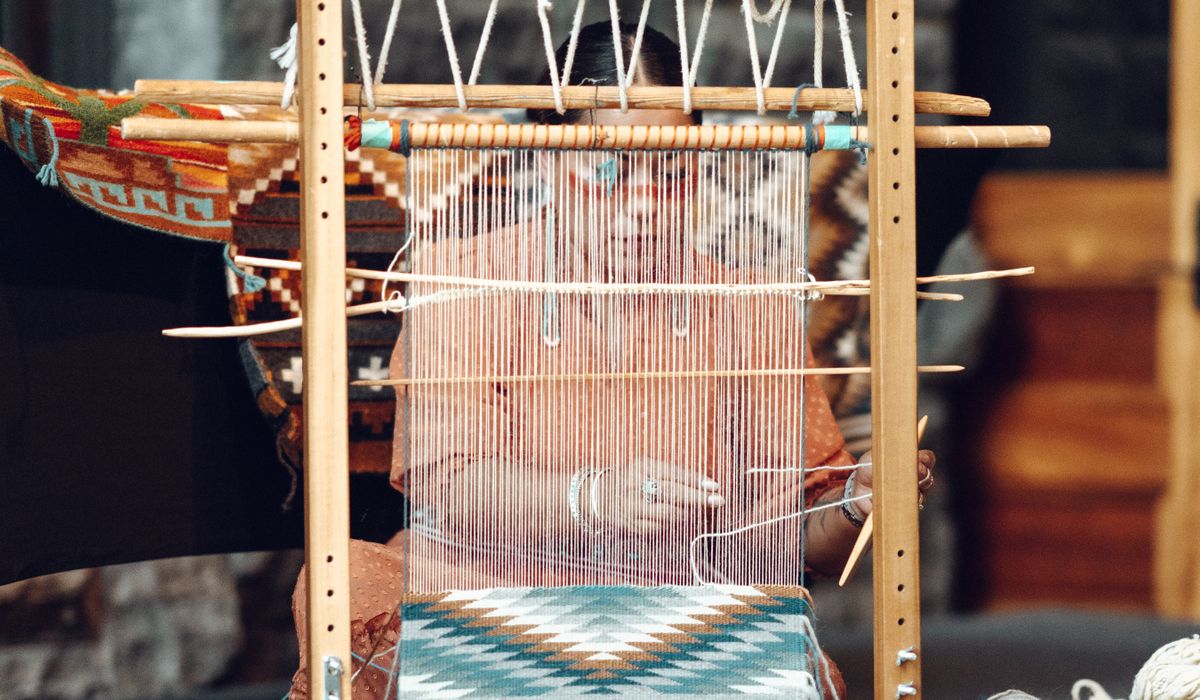
Start with the warp, not the colour
There is a particular moment, about ten minutes into your first rigid heddle project, when you realise the yarn you chose is fighting you. The ends are fuzzing. Two have snapped. The whole thing has gone slack on one side. It is almost always the warp that causes this, and almost always a yarn that was never designed to be pulled back and forth through a heddle several hundred times an hour.
On a rigid heddle loom, half your warp ends sit in the slots and half pass through the holes. Every change of shed slides them against plastic or wood. A yarn with a firm twist and a smooth surface shrugs this off; a soft, fluffy, lightly twisted yarn does not. Before you fall in love with a colour, ask whether it would survive being rubbed between your fingers for an afternoon. If not, save it for the weft.
Fibres that make a dependable warp
British wool is genuinely good at this job, which is one of the quiet pleasures of weaving here. Look for a plied, worsted-spun yarn with a crisp hand and a little bounce. In practice, that means:
- Bluefaced Leicester — fine, lustrous and strong for its weight, with enough elasticity to keep tension even. A 4-ply or DK makes a lovely first scarf.
- Shetland — soft and slightly fuzzy, but usually plied firmly enough to weave well. Choose a woollen-spun Shetland for warmth and a hazy finish, and accept a little more care with tension.
- Romney and other downs-type fleeces — traditionally used for warp and still excellent. If a yarn is described as worsted-spun and hard-wearing, this is likely to be it.
- Blends with a little silk or nylon — not traditional, but a small percentage adds abrasion resistance without changing the character of the cloth.
Two plies is the minimum; three or four is better. A yarn spun with a firm twist and plied back on itself holds its shape under tension, which is exactly what a beginner needs.
Yarns to treat with care
Some yarns are perfectly good weaving materials, but they belong in the weft, or on a third project when your hands have learned to feel an even tension.
- Single-ply yarns tend to untwist as they rub against the heddle. They pill, shed fibres and can part altogether.
- Boucle, chenille and anything with a loop or slub catches in the slots, snags on neighbouring ends and produces a scarf with a halo of pulled threads.
- Alpaca and mohair are slippery and have very little elasticity. They sag between heddle and back beam and can slide out of the knots at the apron rod.
- Superwash wool behaves more like acrylic than wool on the loom, and finished cloth can grow when washed. Not wrong, but not the easiest place to start.
- Cotton and linen have almost no stretch, so every tension fault shows. Wonderful in experienced hands, unforgiving in new ones.
Let your reed choose the yarn
Rigid heddle reeds come in fixed setts — usually 5, 7.5, 10 and 12.5 dents per inch. You cannot change the sett halfway through a scarf, so work backwards: choose the reed first, then pick a yarn that sits happily in it.
As a starting point for a balanced plain-weave scarf:
- 12.5 dent — fine 4-ply, around 12 to 14 ends per inch, for a light, drapey scarf.
- 10 dent — 4-ply or light DK, around 10 to 12 ends per inch, the most versatile first scarf.
- 7.5 dent — DK or aran, around 8 to 9 ends per inch, a warm, quick weave.
- 5 dent — chunky, around 5 to 6 ends per inch, a rug-weight scarf that finishes in an evening.
If the yarn feels crowded in the reed, go up a reed size or space the warp in alternate slots. If the ends rattle around, the cloth will be sleazy and the scarf will wear badly.
The weft is where you can play
Weft ends take far less punishment than warp ends, so this is the place for the soft, the shiny and the slightly unruly. A handspun single, a silk-blend laceweight or a contrast colour in a different fibre will all work, provided you keep the grist roughly similar to the warp. If the weft is much thicker, the scarf bulks up and the warp shows through; if it is much finer, you will beat the cloth to board.
Wet-finish a short sample before you commit. Wool fulls slightly, which tightens the cloth and softens the twist. Leave a 40 cm sample in warm water with a drop of wool wash, roll it in a towel and dry it flat, then measure it again. The difference between loom state and finished cloth is the most useful information you will get all project, and it costs twenty minutes.
A simple first recipe
A 7.5-dent reed, a DK Bluefaced Leicester in an undyed natural shade, a warp 25 cm wide and 180 cm long, and a weft in the same yarn or a slightly softer contrast colour. Hemstitch the first and last few picks, twist the fringes, and finish with a cool hand wash. You will end up with a scarf that is genuinely warm, slightly rustic and made entirely from British fleece — and you will have learned, on the loom, which yarns you can trust next time.


You do not need vast acreage to begin. Practical steps for renting land, sourcing tools, and planning your first livestock.
Angora rabbits need daily grooming and cool housing. Learn how to collect their luxurious wool without causing stress.
Success comes from crop rotation and steady sowing. Map beds, choose varieties, and keep harvests coming through every season.
Green woodworking uses fresh timber and simple tools. Start with a shave horse, drawknife, and a few safe cutting techniques.